Northridge sits in Los Angeles County with a Mediterranean climate that brings hot, dry summers and occasional intense winter rains. These patterns hit older single-family homes built in the 1950s through 1970s along Reseda Boulevard and in Northridge West especially hard. When summer heat spikes, air-conditioning condensate lines often fail inside walls or attics, sending water into insulation and subfloors that are hard to reach without removing baseboards or sections of drywall. Winter storms can overwhelm older clay sewer lines common in Northridge East, pushing water back through floor drains in garages and laundry rooms.
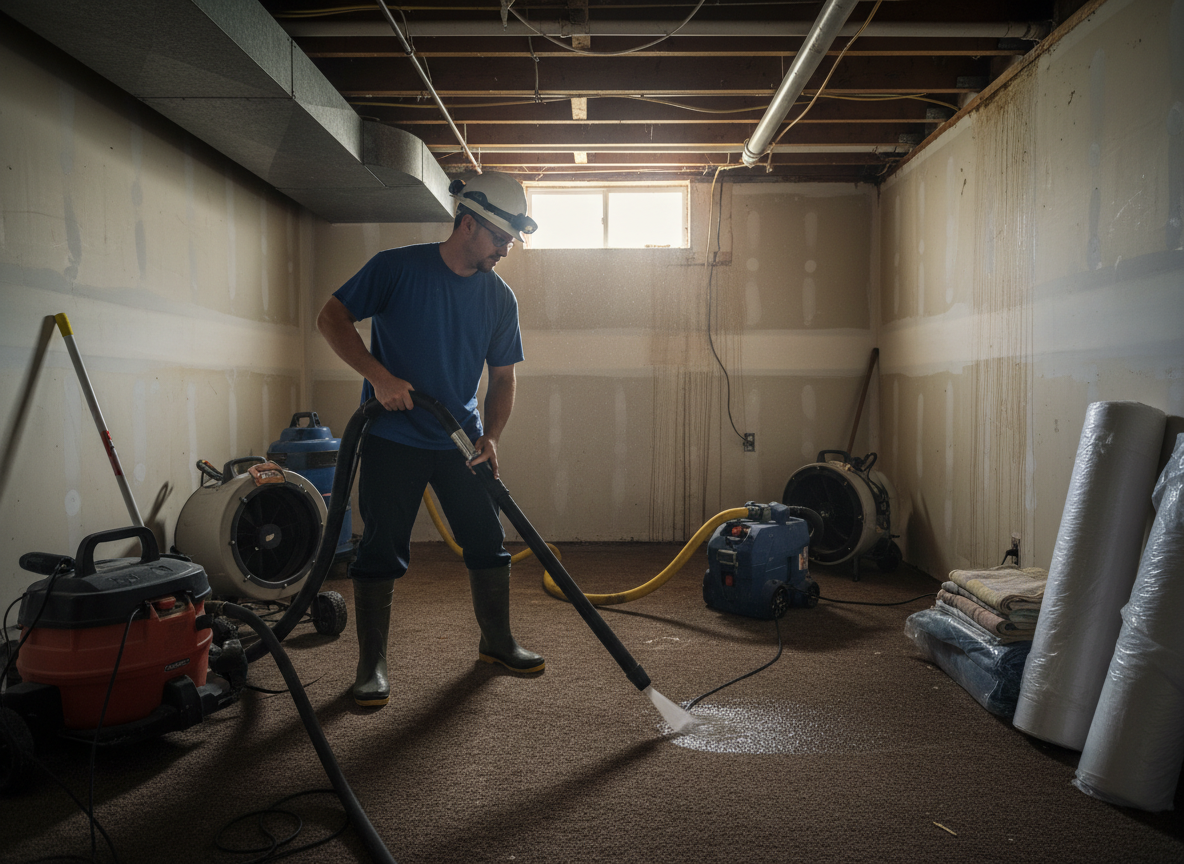
Water cleanup here requires more than simple extraction because the soil in the San Fernando Valley retains moisture longer than coastal zones. Homes near the Northridge Fashion Center and CSUN Campus Area frequently sit on lots with poor grading, so water pools against foundations during heavy rain. Technicians must pull carpet pads quickly, use air movers directed at sill plates, and monitor moisture meters on both sides of shared walls in townhomes. Missing even small pockets of water behind kitchen cabinets leads to mold within days when temperatures climb back into the nineties.
Every job starts with mapping the water path through the structure rather than guessing. In multi-story homes common around Granada Hills and Porter Ranch borders, water travels down interior walls and collects on the first-floor slab, requiring removal of toe-kick panels and sometimes sections of hardwood. Crews document every step with photos because insurance adjusters in Los Angeles County want clear proof of the affected square footage and the drying equipment placed on site.
Technician insight
In Northridge, the thing that catches most people out with water cleanup services is how hot summer days push condensate from rooftop AC units down through stucco walls on 1960s homes near Reseda Boulevard, soaking insulation that never dries on its own because the soil holds the moisture.
AC Condensate Leak in Northridge West
A homeowner in Northridge West noticed water stains on the living room ceiling during a July heat wave. Inspection found a clogged condensate line from the attic unit that had been dripping for weeks. Crews removed the affected drywall section, extracted water from the insulation, and ran drying equipment for four days until readings returned to normal. The ceiling was restored without further damage spreading to adjacent rooms.
How it works
- 1
On-Site Assessment
Technician arrives within hours, locates the water source, and maps moisture in walls, floors, and ceilings using meters.
- 2
Water Extraction
Industrial vacuums and pumps remove standing water from carpets, hardwood, and concrete before it migrates further.
- 3
Drying and Dehumidification
Air movers and dehumidifiers are positioned based on the home's layout and the season's humidity levels.
- 4
Final Moisture Check
Readings are taken daily until levels match unaffected areas, then equipment is removed and the site is cleared.
Pricing
Upfront estimates provided after inspection; cost depends on water volume, materials affected, and number of rooms involved.