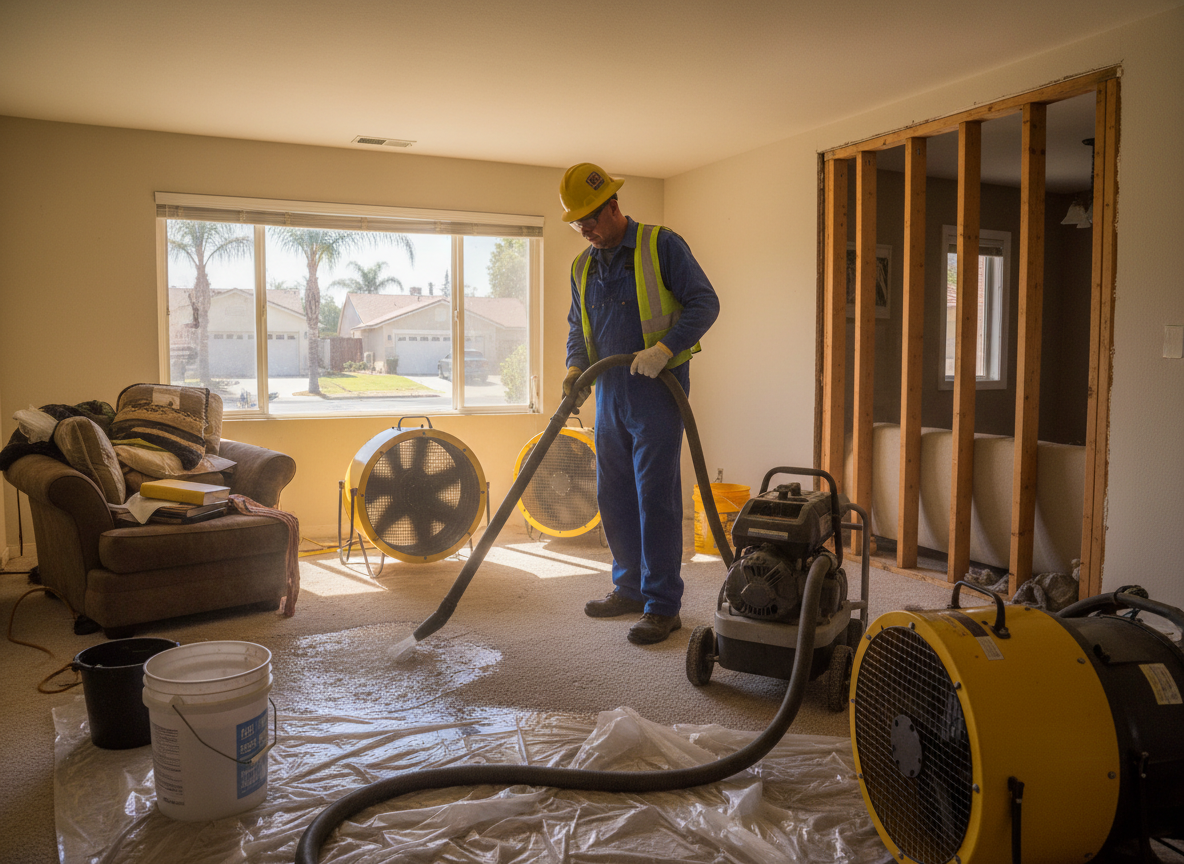
Northridge homes built before 1970 often feature plaster walls and raised foundations that trap floodwater from winter storms, especially along Reseda Boulevard where drainage slopes toward older neighborhoods. Mediterranean summers accelerate mold growth once temperatures climb above 85 degrees, so extraction must include hidden moisture behind baseboards in Northridge West properties. Technicians check soil saturation near California State University Northridge because clay-heavy ground keeps water against foundations for days after rain stops.
Flash flooding from the nearby foothills can push debris-laden water into crawl spaces in Northridge East, requiring removal of saturated insulation and treatment of wooden joists to prevent rot. Crews use moisture meters on concrete slabs common in post-1980 builds near the Northridge Fashion Center because trapped water under flooring leads to cupping within weeks. Work in Los Angeles County also means following local health rules for Category 3 water when storm drains back up.
Restoration after flood events in Porter Ranch and Granada Hills spillover areas frequently involves replacing drywall up to four feet high where wicking occurs. Hot summer conditions demand dehumidifiers sized for the valley heat to reach under 50 percent relative humidity before reconstruction starts. Owners near Chatsworth often discover that tree roots near older sewer lines create repeated entry points during heavy rain, requiring camera inspection before final drying.
Technician insight
In Northridge, the thing that catches most people out with Flood restoration services is how the clay soil around Northridge West holds winter rain against older foundations for days, letting water wick up plaster walls even after the rain stops and homeowners think the job is done.
Storm water in Northridge West crawl space
Heavy rain pushed water under a 1960s home near Reseda Boulevard. Inspection found saturated insulation and joists with moisture readings above 20 percent. Extraction and targeted drying prevented rot; final readings cleared the space for new insulation within five days.
How it works
- 1
Site Assessment
Technicians inspect affected rooms in Northridge East or West, document moisture levels in walls and floors, and identify water source from storm runoff or plumbing failure.
- 2
Water Extraction
Remove standing water using truck-mounted pumps and portable units suited for older slab homes near Reseda Boulevard.
- 3
Drying And Dehumidification
Place air movers and dehumidifiers calibrated for Los Angeles County summer heat, monitoring hidden pockets behind plaster in pre-1970 houses.
- 4
Sanitation And Restoration
Treat affected materials, remove irreparable drywall or insulation, and prepare surfaces for rebuilding once moisture readings drop below threshold.
Pricing
Upfront quotes after on-site inspection; cost driven by water volume, affected square footage, and whether hidden moisture requires wall or floor opening.