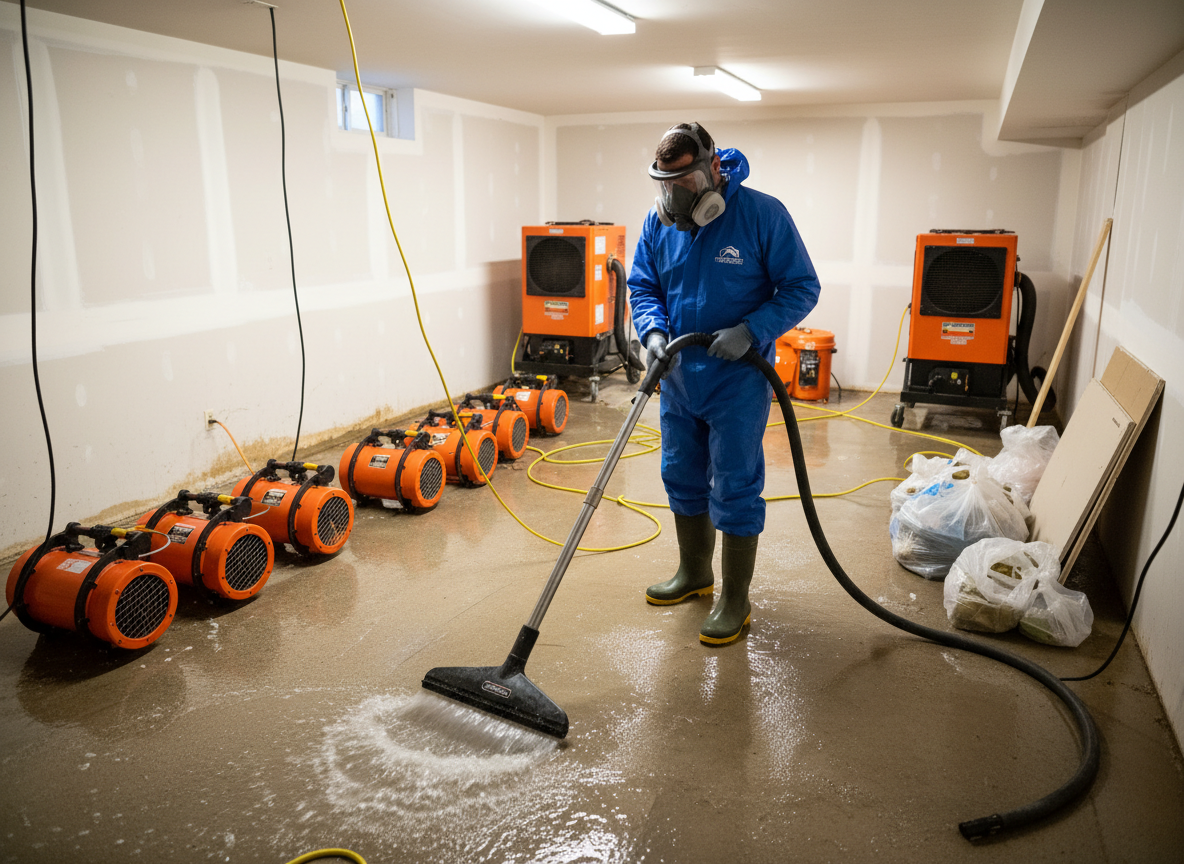
Northridge homes built before and after the 1994 earthquake often have mixed plumbing materials including galvanized steel and early PEX runs that fail at joints during heat expansion. In a Mediterranean climate with hot summers, standing water under slabs or in crawl spaces evaporates quickly during the day then condenses at night, driving moisture into drywall and subfloors within hours. Emergency water cleanup crews must pull carpet padding and baseboards the same day to prevent hidden mold colonies from forming behind cabinets in Northridge West tract homes.
When a supply line bursts near Reseda Boulevard or on the CSUN Campus Area side of Northridge, water travels along the slight slope toward the flood control channels that run behind many streets. Technicians map the flow path with moisture meters because water can reach neighboring lots in Granada Hills or Porter Ranch before homeowners notice. Removing water from stucco walls requires cutting weep holes at the bottom plates rather than relying on fans alone, especially in the older single-story ranch houses common in Northridge East.
Los Angeles County code requires documentation of moisture levels before any reconstruction begins, so crews log readings at multiple depths in the concrete slab and wood framing. Hot summer temperatures speed surface drying but leave deeper moisture trapped in particleboard cabinet bases and under vinyl flooring, creating warped seams weeks later if extraction skips these layers. Proper containment with plastic barriers also keeps dust from construction debris out of living spaces during the cleanup phase.
Technician insight
In Northridge, the thing that catches most people out with Emergency water cleanup is how fast water moves under the slab in the older post-quake homes along Reseda Boulevard; once it reaches the CSUN Campus Area side, it can travel into neighboring Granada Hills lots before anyone sees it upstairs.
Burst Supply Line Under Kitchen Slab
A Northridge West homeowner noticed water seeping from under the dishwasher after a hot summer day. Extraction revealed water had traveled under the slab toward the garage. Crews removed baseboards, extracted water from the crawl space edge, and ran drying equipment for four days until readings normalized, preventing mold growth in the adjacent laundry room.
How it works
- 1
Arrival and Safety Assessment
Technicians arrive within the hour, shut off water at the meter if needed, and check for electrical hazards before entering affected rooms in Northridge homes.
- 2
Water Extraction
Truck-mounted pumps and portable extractors remove standing water from floors and carpets, focusing on low spots common in Northridge East and West tract layouts.
- 3
Drying and Monitoring
Air movers and dehumidifiers are placed while daily moisture readings track progress through drywall, subfloors and cabinetry until levels return to normal.
- 4
Final Clearance
Once readings stabilize, barriers come down and the property is released for repairs, with photos and logs provided for insurance in Los Angeles County claims.
Pricing
Cost depends on the volume of water, number of affected rooms, and whether slab or wall cavities require extended drying.