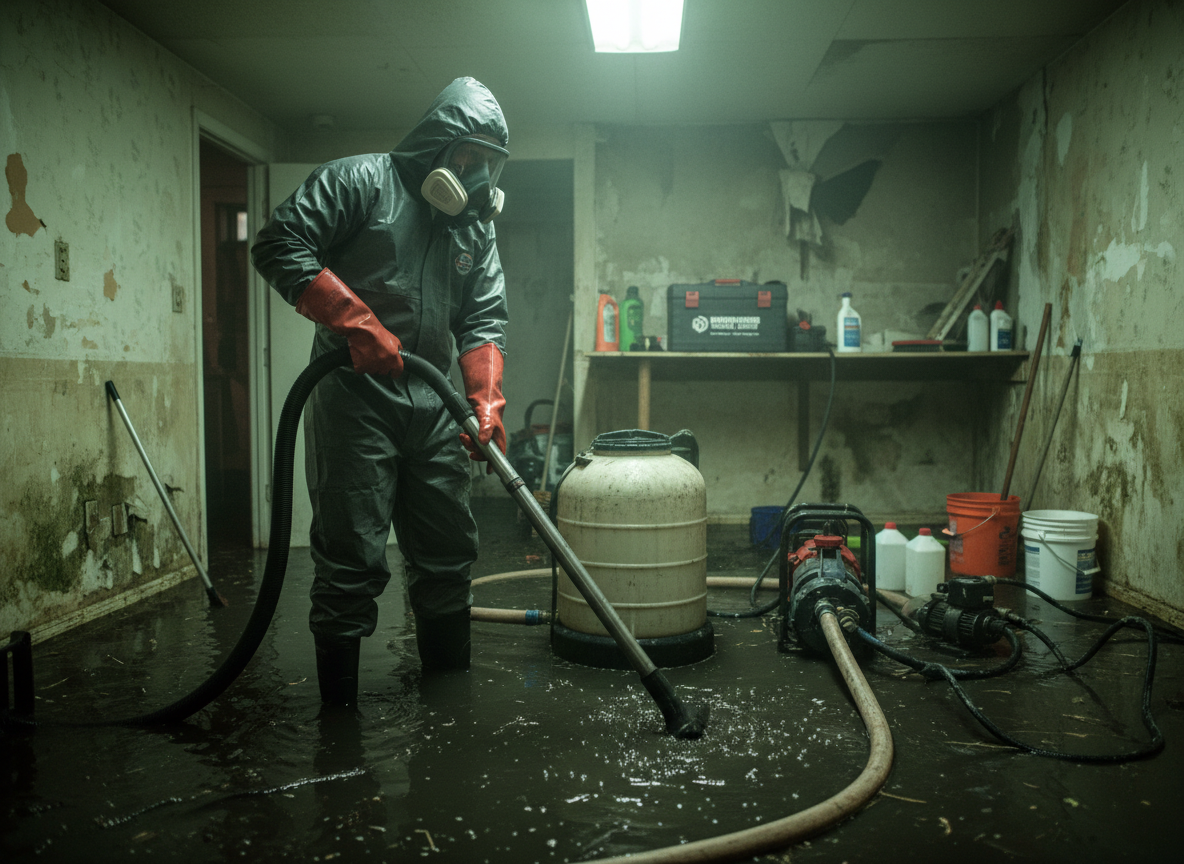
Sewage backups in Northridge often stem from aging cast-iron lines common in homes built before 1970 around Northridge East and near Reseda Boulevard. Hot Mediterranean summers accelerate bacterial growth in standing waste, requiring immediate extraction before mold sets into drywall and subfloors. Technicians must follow Los Angeles County health codes for Category 3 water, using HEPA air scrubbers and antimicrobial agents rated for porous materials like carpet pad and baseboard that cannot be salvaged.
Properties near California State University Northridge and the Northridge Fashion Center frequently see tree-root intrusion in sewer laterals during dry spells, pushing effluent into crawl spaces. Crews isolate HVAC systems early to prevent aerosolized pathogens from traveling through ductwork into living areas. In Northridge West and nearby Porter Ranch, slab-on-grade homes complicate removal because waste can migrate under tile without visible surface clues until odors appear weeks later.
Granada Hills and Chatsworth borders bring additional challenges from hillside drainage that funnels storm debris into municipal lines, overwhelming residential traps. Proper disposal involves documented transport to approved Los Angeles County facilities, with moisture mapping to confirm hidden saturation in insulation and under cabinets. Homeowners should avoid DIY attempts because improper containment spreads contaminants to unaffected rooms and voids any future insurance consideration.
Seasonal Guidance
Hot summers in Northridge increase evaporation rates that concentrate odors and bacteria in enclosed spaces like garages and laundry rooms. Schedule inspections after any heavy rain or before holiday gatherings when older homes near Reseda Boulevard see higher usage on plumbing.
Technician insight
In Northridge the thing that catches most people out with sewage cleanup is how quickly waste migrates under the slab in 1960s homes around the CSUN Campus Area once summer heat dries the top layer. Homeowners often mop visible water and think the job is done, but the odor returns from under the tile because the soil beneath never got addressed.
Northridge East Backup
A homeowner in Northridge East reported sewage rising in a bathroom after heavy use during a heat wave. Inspection found a cracked lateral line allowing waste to pool beneath the laundry room slab. Extraction, antimicrobial application, and targeted drying under the flooring prevented spread into adjacent living spaces and restored safe conditions without full demolition.
How it works
- 1
Emergency Assessment
Arrive on site within hours to evaluate contamination extent in affected rooms while protecting unaffected areas.
- 2
Containment and Extraction
Set up physical barriers and remove standing sewage using truck-mounted pumps rated for biohazards.
- 3
Cleaning and Disinfection
Apply EPA-registered antimicrobials to all hard surfaces and remove unsalvageable materials per local guidelines.
- 4
Drying and Verification
Deploy commercial dehumidifiers and air movers, then test moisture levels before final clearance.
- 5
Restoration Coordination
Document all steps for insurance and prepare surfaces for rebuilding or replacement work.
Pricing
Costs depend on square footage affected, depth of contamination, and whether structural materials require removal.