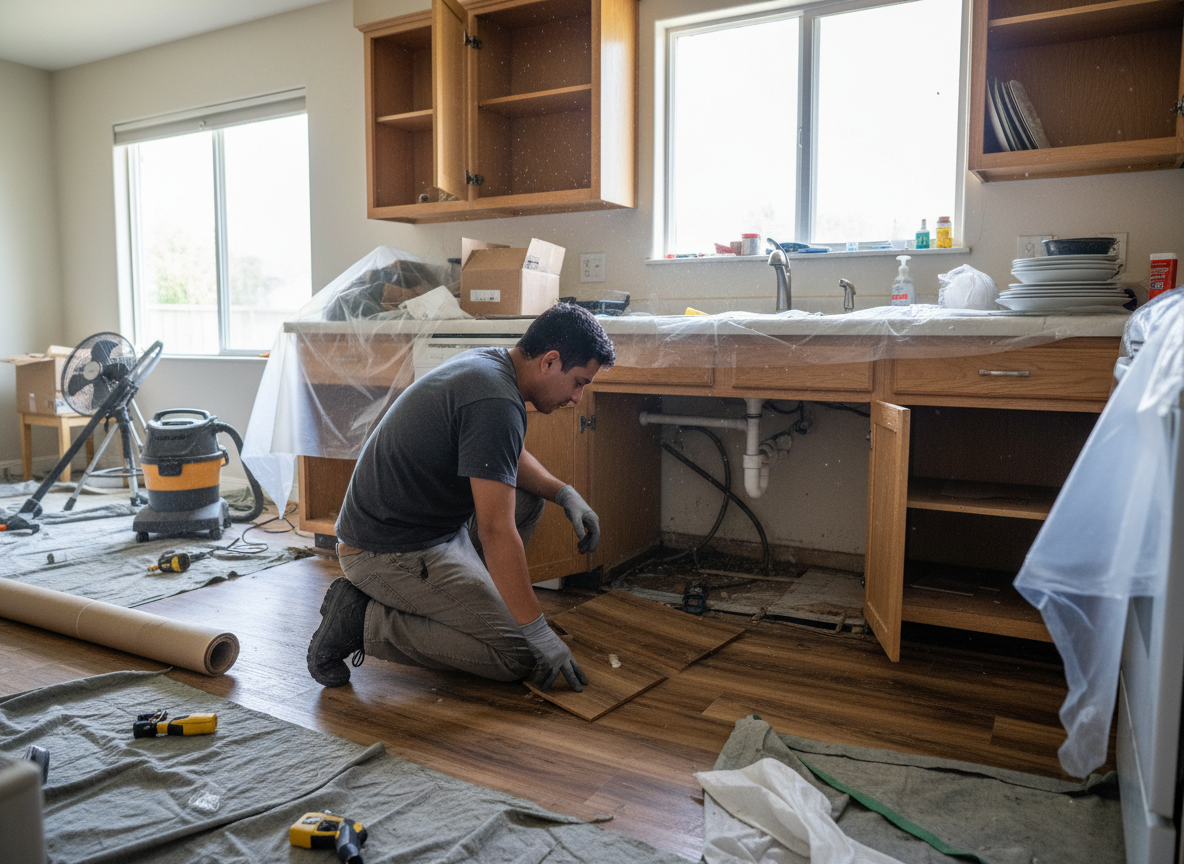
Northridge homes built in the 1960s through 1980s often feature galvanized or early copper supply lines under sinks and dishwashers that corrode from decades of hard water exposure common in Los Angeles County. When a pinhole leak develops behind a cabinet, water travels along the particleboard base and into the subfloor, especially in single-story ranch houses prevalent on Reseda Boulevard corridors. Hot summer temperatures accelerate microbial growth within 48 hours, so extraction and drying must begin before moisture reaches the slab or adjacent drywall.
In Northridge West and near California State University Northridge, many kitchens sit above crawlspaces with limited access, making hidden saturation in joists a frequent issue after dishwasher failures or ice-maker line bursts. Mediterranean climate patterns mean low humidity most of the year, yet once summer heat arrives any trapped moisture quickly fuels mold on the underside of cabinets. Technicians must pull toe-kicks and sometimes sections of flooring to confirm the full extent rather than relying on surface readings alone.
Porter Ranch and Granada Hills border properties share similar tract construction, but Northridge’s slightly older stock often includes post-1994 seismic upgrades that altered under-cabinet framing and created new moisture traps. Repair work must respect current Los Angeles County building codes for electrical and plumbing when replacing damaged sections, particularly where GFCI outlets sit near water sources. Owners in Northridge East frequently discover that insurance adjusters require documentation of the leak source before approving cabinet or flooring replacement.
Seasonal Drying Challenges
Hot summer conditions in the San Fernando Valley speed surface evaporation but leave deeper moisture in plywood subfloors and particleboard, requiring extended dehumidification runs that homeowners often underestimate.
Common Pipe and Appliance Sources
Dishwasher drain hoses, refrigerator ice lines, and garbage disposal gaskets fail regularly in Northridge homes; each requires different isolation steps before drying can start.
Technician insight
In Northridge, the thing that catches most people out with Kitchen water damage repair is how many 1970s tract homes in Northridge East have particleboard cabinet bases sitting directly on the slab with no vapor barrier, so a slow sink leak travels under the entire run of cabinets before anyone notices.
Dishwasher Leak in Northridge West
A homeowner noticed water near the dishwasher after a cycle. Inspection found the drain hose had split and water had wicked into the subfloor and toe-kick area. Extraction and targeted drying prevented mold spread into the adjacent dining room; only the base of two cabinets needed replacement.
How it works
- 1
On-Site Assessment
Technician inspects the leak source, maps moisture migration into cabinets, subfloor, and walls using meters, then documents affected materials.
- 2
Water Extraction
Standing water is removed from floors and under appliances, followed by removal of saturated baseboards or toe-kicks to expose hidden pockets.
- 3
Drying and Monitoring
Air movers and dehumidifiers are placed; daily moisture readings track progress until levels return to normal for the structure.
- 4
Repair and Restoration
Damaged cabinetry sections, flooring, and drywall are replaced or repaired to match existing finishes while meeting local code requirements.
Pricing
Upfront quotes based on visible damage and moisture mapping; final cost depends on extent of hidden saturation and materials replaced.